Motorcycle Storage: How To Prep and Protect Your Bike Between Rides
A motorcycle left sitting for weeks without preparation can come back with a gummed-up carburetor, a flat-spotted tire, and a battery that won’t hold a charge. Riders around Tacoma know the wet Pacific Northwest winters make extended storage a reality for a good portion of the year, and the difference between pulling your bike out in spring ready to ride and spending a weekend diagnosing problems often comes down to the steps you take before you park it. These motorcycle storage tips cover the prep work that actually matters.
Fuel and Fluids First
Fuel is the first thing to address before any extended storage period. Gasoline degrades over time and leaves varnish deposits inside the fuel system. Add a fuel stabilizer to a full tank, run the engine for a few minutes to circulate it through the carb or injectors, then shut it down. A full tank also reduces the air space inside that can contribute to internal corrosion.
Check your oil before parking the bike. Used oil carries combustion byproducts that can degrade engine components over a long sit. If you’re storing the bike for more than a month, changing the oil before storage rather than after is the better call. Do the same check on coolant if your bike is liquid-cooled.
Battery and Tires
A battery left connected and unattended will self-discharge and may not recover. Disconnect it or connect it to a trickle charger or battery tender rated for motorcycle batteries. Either approach keeps you from facing a dead battery when riding season opens back up.
Tires develop flat spots when a bike sits stationary under its own weight for extended periods. If you have a center stand, use it to take weight off both tires. If not, moving the bike forward a few inches every few weeks shifts the contact point. Inflate tires to the upper end of the recommended range before storage, since pressure drops gradually in cooler temperatures.
Protecting the Exterior
A light coat of wax on painted surfaces and a thin layer of WD-40 or a dedicated corrosion inhibitor on chrome and exposed metal can help reduce surface oxidation during storage. Plug the exhaust outlet with a clean rag to keep insects and condensation out of the pipe. Cover the bike with a breathable cover rather than a plastic tarp, which can trap condensation against the finish.
Choosing the Right Storage Unit
Where you store the bike matters as much as how you prep it. A garage works if you have one, but many riders in the Tacoma area don’t have covered space, or the garage is already full. A dedicated storage unit keeps the bike out of the elements and off the driveway.
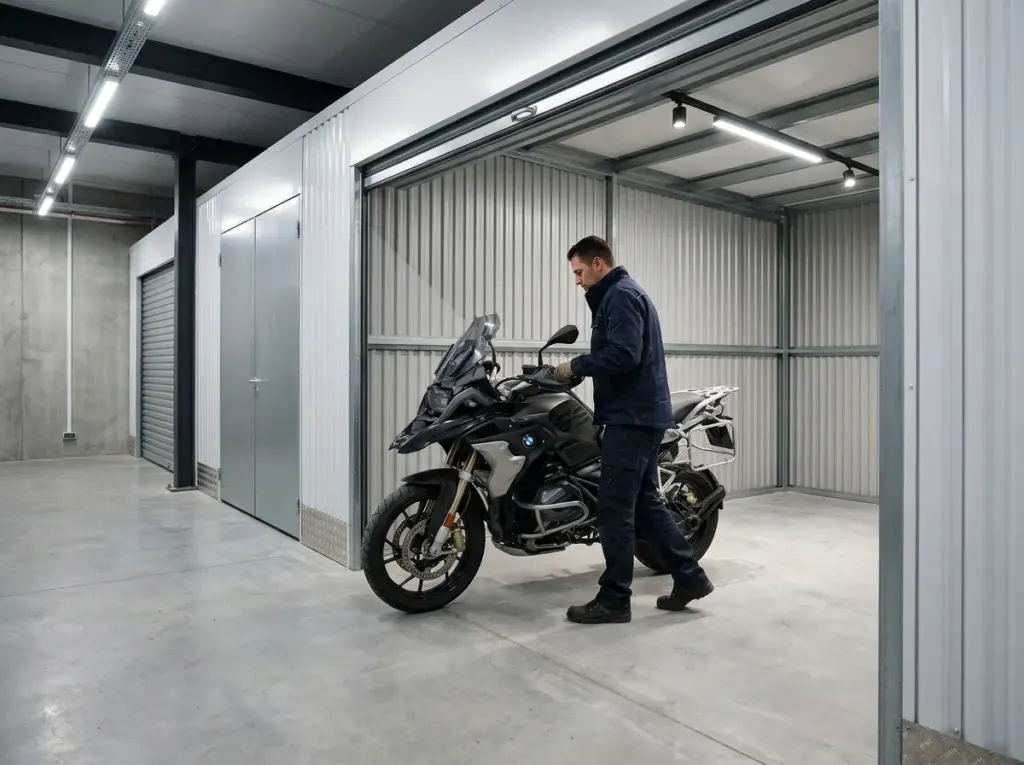
For a single motorcycle, a 5×10 storage unit is typically enough room for the bike plus a small amount of gear. If you’re storing riding gear, a second bike, or additional equipment alongside it, a 10×10 unit gives you room to work around the bike without bumping into walls. Check the unit size guide if you’re unsure which fits your situation.
Tacoma’s wet winters make a heated unit worth considering for longer storage periods. Temperature swings between cold nights and warmer afternoons can affect rubber components, battery performance, and metal surfaces over months. Daffodil Storage offers heated storage units in Tacoma that maintain a consistent temperature range through the season, which reduces the stress on components sitting idle for months at a stretch. For more on seasonal vehicle prep, our seasonal vehicle storage guide covers additional detail on boats, RVs, and motorcycles heading into the colder months.
Good prep before storage and the right unit to park it in means your bike comes out of storage ready for the ride ahead. Find a location near you and reserve a unit before riding season ends.